

.png)
Masinde Muliro University of Science and Technology (MMUST), through the School of Disaster Management and Humanitarian Assistance (SDMHA), under the leadership of the Dean, Dr. Ferdinand Nabiswa successfully convened a two-day Multi-Disciplinary Academic Colloquium and Mid-Term Curriculum Review from 11th to 12th June 2026 at the University's Field Station in Budalang’i, Busia County.
The colloquium, held under the theme “Leveraging Geospatial Technologies, Indigenous Knowledge, Human Security and Peacebuilding for Community Resilience Towards Disaster Risk Reduction,” brought together leading scholars, researchers, government agencies, development partners, industry experts, practitioners, students, and alumni to deliberate on innovative approaches to disaster risk reduction (DRR) and resilience building.
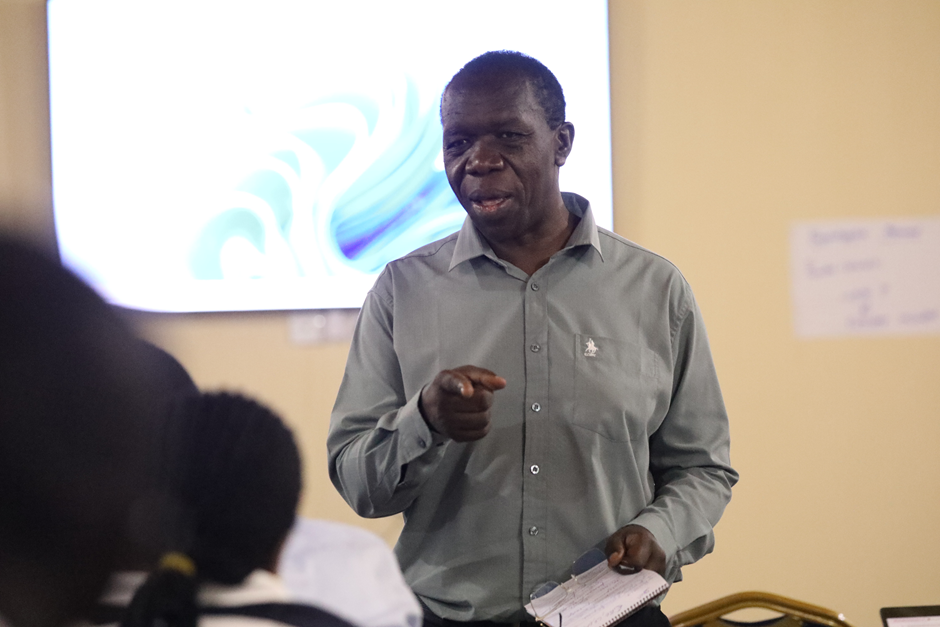
The Vice Chancellor Prof. Solomon Shibairo addressing attendees during the official opening of the colloquium
Officially opening the colloquium, MMUST Vice Chancellor, Prof. Solomon Shibairo, underscored the urgency of strengthening disaster preparedness and response mechanisms in the face of escalating climate-related disasters across Africa. He noted that climate change has intensified floods, droughts, conflicts, and humanitarian crises, calling for integrated and science-driven approaches to disaster management.
“Geospatial technologies, indigenous knowledge systems, and peacebuilding are not isolated concepts; they are complementary pillars that can transform how communities anticipate, prepare for, and respond to disasters,” said Prof. Shibairo.
The Vice Chancellor further emphasized MMUST’s commitment to positioning itself as a Centre of Excellence for Disaster Risk Reduction (CoEDRR) in Kenya and the wider region. He highlighted the University's unique advantage of hosting one of the few dedicated Schools of Disaster Management and Humanitarian Assistance on the African continent, noting that the colloquium would contribute significantly to the strategic roadmap for achieving this vision.
Earlier, the Deputy Vice Chancellor for Academic and Student Affairs, Prof. Hussein Golicha, described the event as a critical platform for both academic renewal and stakeholder engagement. He emphasized the significance of the Mid-Term Curriculum Review, particularly as Kenya transitions towards Competency-Based Education and Training (CBET) in higher education institutions.
The Deputy Vice Chancellor Academic and Student Affairs Prof. Hussein Golicha addressing colloquium attendees
“This curriculum review presents an opportunity to assess whether our programmes are producing graduates who are competent, industry-ready, and capable of addressing emerging challenges within the disaster risk reduction ecosystem,” stated Prof. Golicha.
He further challenged participants to strengthen the link between research and practice, observing that Africa's challenge is often not the absence of knowledge but the inability to effectively translate research findings into policy and community action.
The Deputy Vice Chancellor (Planning, Research and Innovation), Prof. Christopher Ngacho, who was also present during the colloquium, commended the School of Disaster Management and Humanitarian Assistance for organizing a timely and impactful forum. He noted that the world continues to grapple with the far-reaching effects of climate change, environmental degradation, and increasingly complex disasters, making such academic engagements more relevant than ever.
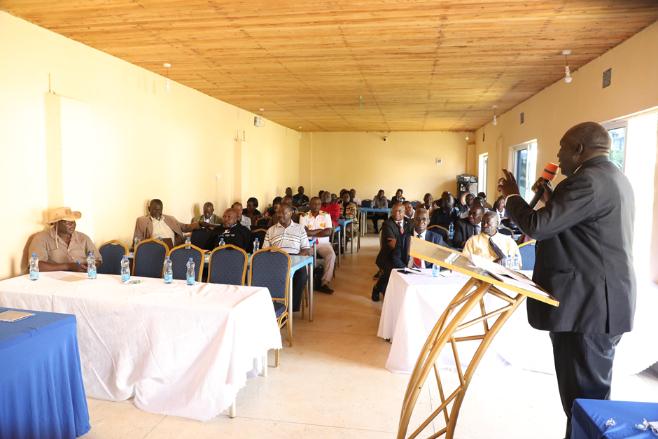
The Deputy Vice Chancellor Planning Research and Innovation Prof. Christopher Ngacho addressing colloquium attendees
He observed that universities have a critical role to play in generating innovative solutions, advancing research, and informing policies that strengthen community resilience. Prof. Ngacho emphasized that the integration of research, technology, indigenous knowledge, and multi-sectoral partnerships remains key to addressing emerging disaster risks and safeguarding sustainable development.
The Dean, School of Disaster Management and Humanitarian Assistance, Dr. Ferdinand Nabiswa, was lauded for his leadership and dedication in spearheading the successful organization of the colloquium. Under his stewardship, the School brought together distinguished experts, researchers, policymakers, practitioners, students, and development partners to engage in meaningful discussions aimed at advancing disaster risk reduction and humanitarian action.
In his remarks, Dr. Nabiswa underscored the importance of fostering collaboration between academia, government agencies, industry players, and local communities in addressing disaster-related challenges. He noted that the colloquium provided an invaluable platform for knowledge sharing, curriculum enhancement, and the development of practical solutions tailored to contemporary disaster management realities. He further reaffirmed the School's commitment to producing highly skilled professionals and strengthening MMUST's position as a leading centre for disaster management education, research, and innovation in the region.
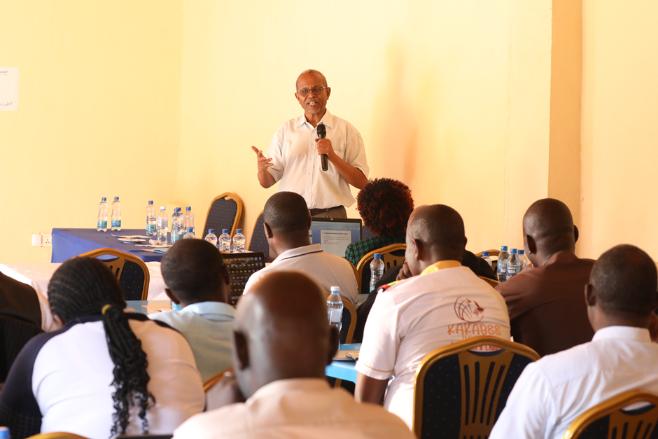
The Dean, School of Disaster Management and Humanitarian Assistance, Dr. Ferdinand Nabiswa making his openning remarks during the colloquium in Budalangi, Busia County.
The colloquium featured keynote addresses and technical presentations by distinguished experts from academia, government agencies, and the disaster management sector. Discussions focused on geospatial technologies for disaster risk reduction, indigenous knowledge systems, human security, peacebuilding, global innovations in resilience building, and competency-based curriculum development.
Among the highlights were presentations on GIS and remote sensing applications in multi-hazard early warning systems, innovations and best practices in disaster risk reduction, peacebuilding and conflict-sensitive approaches to resilience, and strategies for strengthening multi-hazard early warning systems and anticipatory action in Kenya.
Participants also engaged in panel discussions, networking sessions, and practical demonstrations, including a first aid practicum aimed at enhancing emergency response competencies.
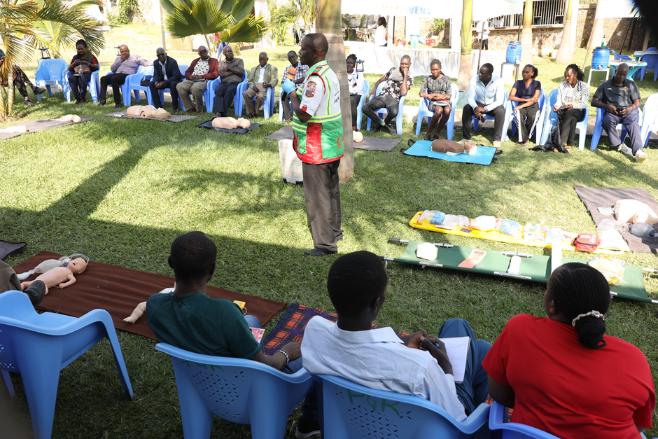
Mr. Kariuki, the ICare CEO addressing colloquium attendees during a practical session in Budalangi, Busia County.
A key objective of the colloquium was to foster stronger collaboration among academia, government agencies, industry players, civil society organizations, and local communities. Through these engagements, participants explored pathways for integrating scientific research, indigenous knowledge, and policy frameworks to enhance community resilience and support informed decision-making in disaster risk reduction.
The forum further provided SDMHA with a valuable opportunity to review and realign its academic programmes with emerging industry trends, stakeholder expectations, and the requirements of Competency-Based Education and Training.
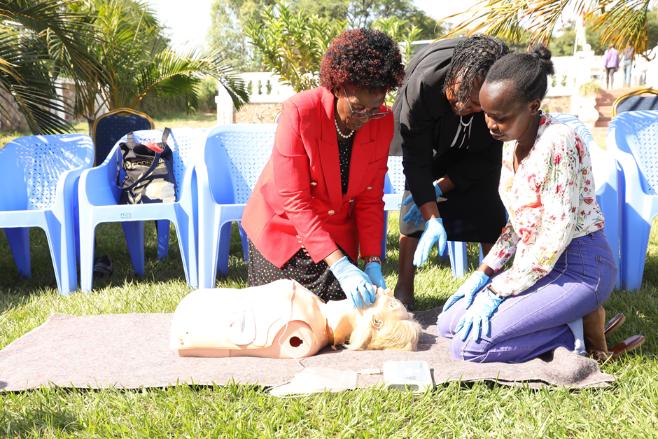
Prof. Josepine Ngaira during a practical session in Budalangi, Busia County.
As the deliberations concluded, participants expressed optimism that the recommendations emerging from the colloquium would strengthen disaster management education, inform policy development, enhance early warning systems, and contribute to the realization of MMUST’s aspiration to become a regional Centre of Excellence for Disaster Risk Reduction.
The successful colloquium reaffirmed MMUST’s commitment to academic excellence, community engagement, innovation, and research-driven solutions that address contemporary societal challenges.