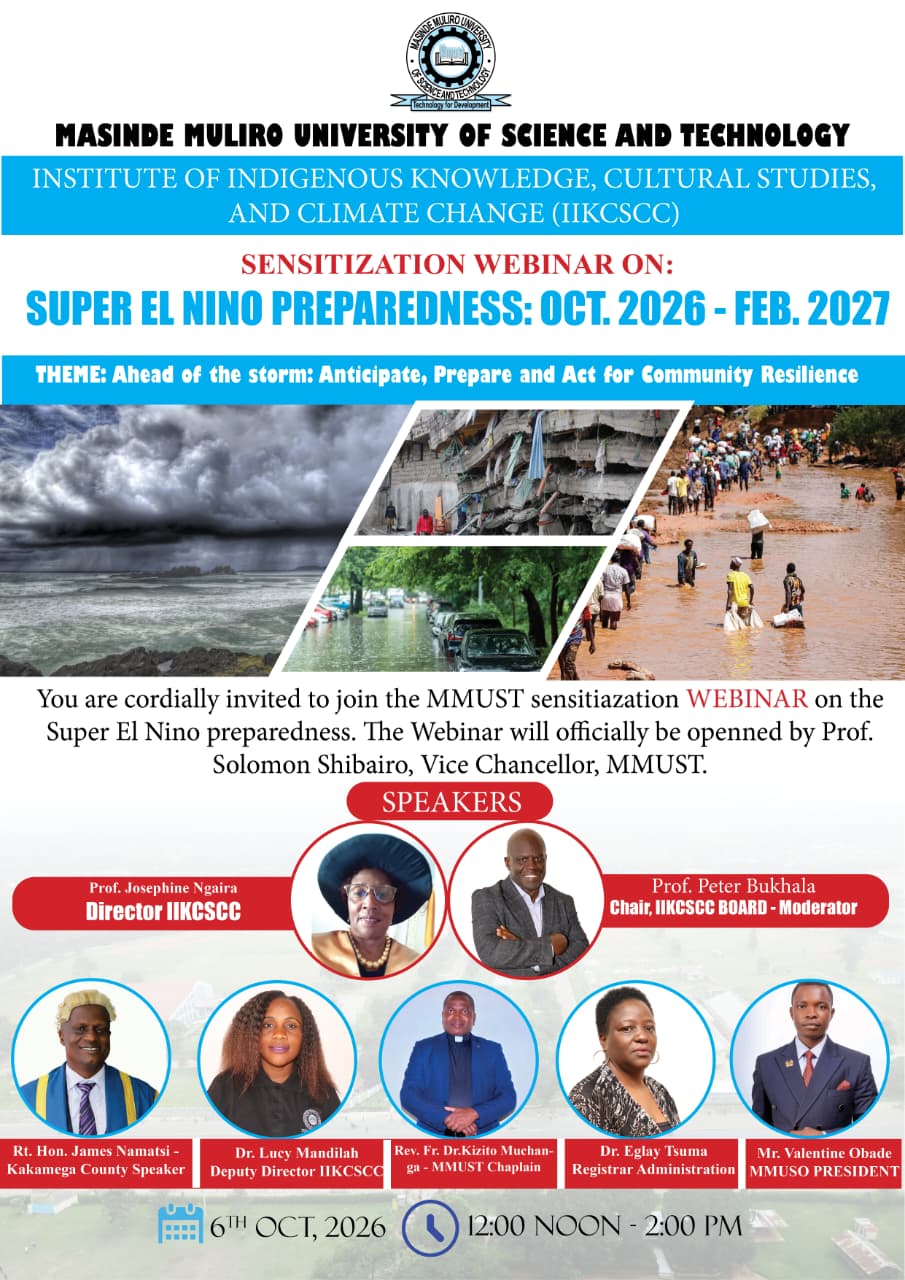
Institute of Indigenous Knowledge, Cultural Studies and Climate Change Hosts Webinar on Super El Niño Preparedness
The Institute of Indigenous Knowledge, Cultural Studies and Climate Change (IIKCSCC) hosted a webinar on Tuesday, 6 October 2026, focusing on preparedness for the anticipated Super El Niño period from October 2026 to February 2027.
Held under the theme “Ahead of the Storm: Anticipate, Prepare and Act for Community Resilience,” the webinar brought together experts, university leaders, county government representatives, students and other stakeholders to discuss practical approaches to strengthening community preparedness and resilience in the face of potential El Niño-related impacts.
The webinar was moderated by Prof. Peter Bukhala, Chair of the IIKCSCC Board, and featured opening remarks by MMUST Vice Chancellor, Prof. Solomon Shibairo.
Among the key presentations was “Super El Niño: Cultural Origin, Climate Science Outlook, Characteristics and Actions for Community Resilience,” delivered by Prof. Josephine Ngaira, Director, IIKCSCC. The programme also featured Hon. James Namatsi, Speaker of the County Government of Kakamega, who addressed county preparedness through multisectoral approaches to enhance community resilience.
Other presentations focused on institutional, historical, student and cultural perspectives on El Niño preparedness. Dr. Eglay Tsuma, Registrar (Administration), discussed elite community preparedness, using MMUST as a case study, while Rev. Fr. Dr. Kizito Muchanga explored the historical perspective of El Niño rains. Mr. Valentine Obado, MMUSO President, highlighted the role of students in preparedness, opportunities and innovations.
The webinar further examined the importance of effective communication and indigenous knowledge in disaster preparedness. Dr. Lucy Mandillah, Deputy Director, IIKCSCC, presented on “From Early Warnings to Community Actions: An Eco-linguistic and Cultural Linguistic Approach to El Niño Preparedness.”
The programme concluded with an interactive Question and Answer Session, moderated by Prof. Bukhala, followed by closing remarks from DVC (PRI), Prof. Christopher Ngacho.
The webinar underscored the importance of anticipatory action, collaboration, indigenous knowledge, early warning systems and community participation in building resilience and reducing the potential impacts of extreme weather events associated with El Niño.